Gastronomi Turizmi Kapsamında Samsun’u Ziyaret Eden Turistlerin Duygusal Değer Algısı ve Tekrar Ziyaret Niyeti Arasındaki İlişki
DOI:
https://doi.org/10.21325/jotags.2025.1644Keywords:
Gastronomy tourism, Emotional value perception, Revisit intention, SamsunAbstract
Gastronomy tourism is a phenomenon that emerges when tourists travel to discover new tastes. In this way, the cultural identity and heritage of the region are emphasized by offering region-specific dishes. When the food culture of the region is brought to the forefront by combining it with other tourism elements, tourists' satisfaction levels increase and their likelihood of visiting again increases. In this context, the main purpose of this study is to measure the relationship between the emotional value perception of tourists visiting Samsun province within the scope of gastronomy tourism and their intention to visit again. For this purpose, a model was created by reviewing the relevant literature, research hypotheses were developed. The population of the study consists of domestic tourists who visited Samsun between April and October 2024. The convenience sampling method was preferred for the participants. A questionnaire was used as a data collection tool in the study. For data analysis, tests such as frequency distribution, factor analysis, correlation, regression were applied. The measurement results revealed that tourists' perception of emotional value has a positive and significant effect on revisit intention. In line with the findings, it was suggested that relevant stakeholders should focus on emotional value enhancing activities for the development of gastronomy tourism in Samsun.
References
Arslan, E. (2020). Çevrimiçi gastronomik turist deneyimlerinin içerik analiziyle incelenmesi. Ankara Hacı Bayram Veli Üniversitesi Turizm Fakültesi Dergisi, 23(2), 442-460.
Arslan, E., & Kendir, H. (2020). COVID-19 salgını sonrası yükselen trend kırsal turizm: Zile örneği. Türk Turizm Araştırmaları Dergisi, 4(4), 3668-3683.
Arslan, E., Kendir, H., & Bozkurt, H.Ö. (2021). Gastronomi turizmi kapsamında ziyaretçilerin yöresel yiyecek tercihleri: Tokat ili örneği. Journal of Tourism & Gastronomy Studies, 9(Special Issue 5), 261-275.
Arslan, E., Kendir, H., Akmeşe, H., Bozkurt, H.Ö., Akyollu, K., & Hiçyakmazer, C.T. (2023). Investigation of Tokat Bez Sucuk, a geographically indicated local food, within the scope of sustainable gastronomy. Sustainability, 15(17), 12889.
Arslan, E., Kendir, H., & Sert, A N. (2024). Ankara’daki restoran işletmesi çalışanlarının iş stresi düzeyi ile işten ayrılma niyeti arasındaki ilişki. Journal of Tourism & Gastronomy Studies, 12(3), 2064-2079.
Birdir, K., & Akgöl, Y. (2015). Gastronomi turizmi ve Türkiye’yi ziyaret eden yabancı turistlerin gastronomi deneyimlerinin değerlendirilmesi, İşletme ve İktisat Çalışmaları Dergisi, 3(2): 57-68.
Bozkurt, H.Ö., Arslan, E., Kendir, H., & Keskin, Ö. (2023). Women in the gastronomy arena: Gender-based experiences encountered. Food Bulletin, 2(2), 29-36.
Bryman, A., & Cramer, D. (2004). Quantitative Data Analysis With SPSS 12 and 13: A Guide for Social Scientists. Routledge.
Büyüköztürk, Ş. (2008). Veri Analizi El Kitabı. (9. Baskı). Pegem Akademi, Ankara.
Canbolat, E., & Çakıroğlu, F.P. (2020). Gastronomi turizmi ve coğrafi işaretleme: Samsun mutfağına yönelik bir değerlendirme, Journal of Tourism & Gastronomy Studies, 8(2), 937-957.
Canbolat, E., Keleş, Y., & Akbaş, Y. Z. (2016). Gastronomi turizmi kapsamında Samsun mutfağına özgü turistik bir ürün: Bafra pidesi. Journal of Tourism & Gastronomy Studies, 4(4), 75-87.
Chen, C.F., & Tsai, D.C. (2007). How destination image and evaluative factors affect behavioral intentions? Tourism Management, 28(4), 1115–1122.
Choe, J.Y., & Kim, S. (2018). Effects of tourists’ local food consumption value on attitude, food destination image, and behavioral intention, International Journal of Hospitality Management, 71, 1-10.
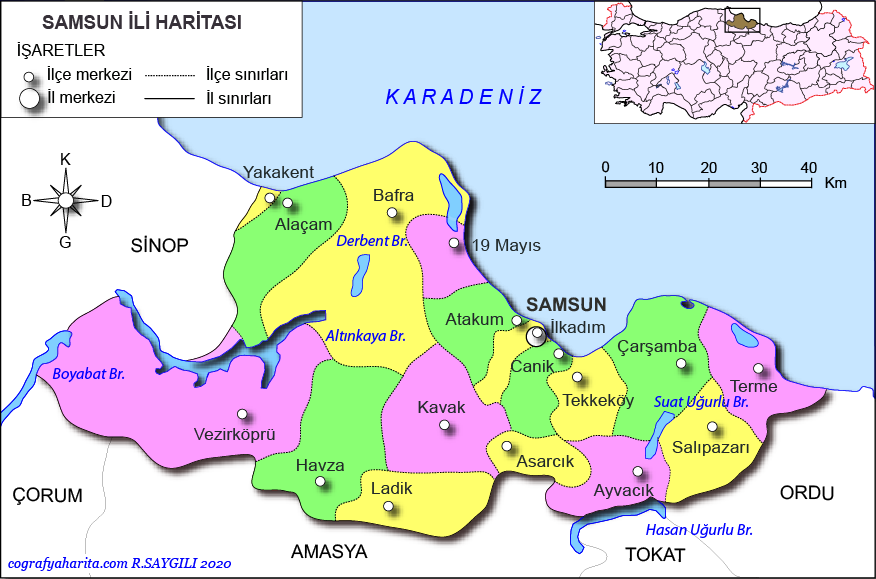
Coğrafya Harita. (2024). Samsun İli Siyasi Haritası http://cografyaharita.com/haritalarim/4l_samsun_ili_haritasi.png. Erişim tarihi: 26.04.2024.
Cole, S.T., & Scott, D. (2004). Examining the mediating role of experience quality in a model of tourist experiences, Journal of Travel and Tourism Marketing, 16(1), 79-90.
Çetin, M. & Küçükkömürler, S. (2019). Destinasyon çekicilik unsuru olarak gastronomi müzeleri: Oleatrium zeytin ve zeytinyağı tarihi müzesi örneği. Ankara Hacı Bayram Veli Üniversitesi Turizm Fakültesi Dergisi, 22(1), 1-17.
Daşdemir, A., & Madenci, A.B. (2021). Gastronomi turizmi kapsamında yerel yiyecek tüketim motivasyonlarının yerli turistlerin tekrar ziyaret etme niyetlerine etkisinin belirlenmesi: Van kahvaltısı örneği, Journal of Gastronomy and Travel Research, 5(2), 155-176.
Dixit, S.K., & Prayag, G. (2022). Gastronomic tourism experiences and experiential marketing. Tourism Recreation Research, 47(3), 217-220.
Gursoy, D., Spangenberg, E.R., & Rutherford, D.G. (2006). The hedonic and utilitarian dimensions of attendees’ attitudes toward festivals, Journal of Hospitality & Tourism Research, 30(3), 279–294.
Ha, J., & Jang, S.S. (2010). Perceived values, satisfaction, and behavioral intentions: The role of familiarity in Korean restaurants. International Journal of Hospitality Management, 29(1), 2–13.
Hakkıtanır, G., & Bulut, Y. (2021). Samsun ilinin sahip olduğu gastronomi turizmi potansiyelinin değerlendirilmesi. Journal of Hospitality and Tourism Issues, 3(1), 68-88.
Hall, M., & Mitchell, R. (2001). Wine and Food Tourism. In N. Douglas & R. Derrett (Eds.), Special interest tourism (pp. 307–325). Australia: John Wiley.
Harrington, R.J., & Ottenbacher, M.C. (2010). Culinary tourism: A case study of the gastronomic capital, Journal of Culinary Science & Technology, 8(1), 14-32.
Hiçyakmazer, C.T., Kendir, H., & Arslan, E. (2023). Turistlerin restoranlara yönelik çevrimiçi yorumlarının içerik analiziyle incelenmesi: Tokat ili örneği. Journal of Tourism & Gastronomy Studies, 11(4), 3616-3634.
Horng, J.S., & Tsai, C.T. (2012). Constructing indicators of culinary tourism strategy: An application of resource-based theory. Journal of Travel & Tourism Marketing, 29(8), 796-816.
Horng, S.H., & Lee J.H. (2009). What environmental factors influence creative culinary studies? International Journal of Contemporary Hospitality Management, 21(1), 100-117.
Hossain, M.S., Hossain, M.A., Al Masud, A., Islam, K.Z., Mostafa, M.G., & Hossain, M.T. (2024). The integrated power of gastronomic experience quality and accommodation experience to build tourists’ satisfaction, revisit intention, and word-of-mouth intention. Journal of Quality Assurance in Hospitality & Tourism, 25(6), 1692-1718.
Hyun, S.S., Kim, W., & Lee, M.J. (2011). The impact of advertising on patrons’ emotional responses, perceived value, and behavioral intentions in the chain restaurant industry: The moderating role of advertising-induced arousal. International Journal of Hospitality Management, 30(3), 689-700.
Ignatov, E. (2003). The Canadian Culinary Tourists: How Well Do We Know Them? [Doctoral Thesis]. University of Waterloo, Canada.
Kareem, S.A., & Venugopal, P. (2024). Examining the relationship between gastronomic experience, revisit intention, destination image and destination brand love: A moderating role of cewebrity reviews. Leisure/loisir, 48(3), 393-419.
Kaya, M., & Çakır Keleş, M. (2019). Destinasyon markalaşmasında gastronomik ürünlerin rolü: Bafra ilçesi örneği. Ege Coğrafya Dergisi, 28(2), 227-240.
Kaynar, S.İ. (2013). Kültürel bir değer olarak Samsun pidesinin tarihsel kökeni, III. Uluslararası Canik Sempozyumu, 755-764. Samsun, Türkiye.
Kendir, H. (2020). Gastronomik lezzetlere yönelik çevrimiçi turist deneyimlerinin incelenmesi: Edirne tava ciğeri örneği. Safran Kültür ve Turizm Araştırmaları Dergisi, 3(3), 408-423.
Kendir, H., & Arslan, E. (2020). Gastronomi turizmi açısından yöresel lezzetlerin duygusal değer boyutunda incelenmesi: Tokat ili örneği, Tokat Gaziosmanpaşa Üniversitesi Sosyal Bilimler Araştırmaları Dergisi. Sonbahar Özel Sayı, 130-138.
Kivela, J., & Crotts, J.C. (2005). Gastronomy tourism: A meaningful travel market segment. Journal of Culinary Science & Technology, 4(2-3), 39-55.
Kline, R.B. (2023). Principles and Practice of Structural Equation Modeling. Guilford publications.
Lertputtarak, S. (2012). The relationship between destination image, food image, and revisiting Pattaya, Thailand, International Journal of Business and Management, 7(5), 111-122.
Lin, Y.C., Pearson, E.T., & Cai, A.L. (2011). Food as a form of destination identity: a tourism destination brand perspective, Tourism and Hospitality Research, 11(1), 30-48.
Long, M.M., & Schiffman, L.G. (2000). Consumption values and relationships: segmenting the market for frequency programs. Journal of Consumer Marketing, 17(3), 214-232.
Long, L.M. (Ed.) (2004). Culinary Tourism. University Press of Kentucky.
Mason, M.C., & Paggiaro, A. (2012). Investigating the role of festivalscape in culinary tourism: The case of food and wine events. Tourism Management, 33(6): 1329-1336.
Nunnally, J.C. (1978). An overview of psychological measurement. Clinical Diagnosis of Mental Disorders: A Handbook, 97-146.
Oppermann, M. (1998). Destination threshold potential and the law of repeat visitation, Journal of Travel Research, 37(2), 131-137.
Özkoç, A.G., Arslan, E., Kendir, H., & Erdoğan, T. (2019). Otel işletmelerinde yeşil mutfak kalitesinin (Y-Mutkal) ölçülmesi: Nevşehir ilinde bir araştırma. Journal of Tourism and Gastronomy Studies, 7(3), 2294-2309.
Park, M. Y., & Muk Kim, Y. (2021). The Effects of local culture experience on revisit ıntention. 21st ACIS International Winter Conference on Software Engineering, Artificial Intelligence, Networking and Parallel/Distributed Computing (SNPD-Winter), 105-109.
Pavlidis, G., & Markantonatou, S. (2020). Gastronomic tourism in Greece and beyond: A thorough review. International Journal of Gastronomy and Food Science, 21, 100229.
Polat, M. (2023). The impact of affective gastronomy experience on satisfaction and revisit intention: Evidence from Turkey. Journal of Tourism & Gastronomy Studies, 11(3), 2187-2202.
Richards, G. (2002). Gastronomy: An Essential İngredient in Tourism Production and Consumption Tourism and Gastronomy. London: Routledge.
Robinson, R.N. & Clifford, C. (2012). Authenticity and festival foodservice experiences, Annals of Tourism Research, 39(2), 571-600.
Sağlam, E., Arslan, E., Kendir, H., & Bozkurt, H.Ö. (2024). Giresun’u ziyaret eden yerli turistlerin yöresel lezzetlere yönelik duygusal değer algısının tekrar ziyaret niyetine etkisi, Journal of Tourism & Gastronomy Studies, 12(4), 3020-3035.
Samsun İl Kültür ve Turizm Müdürlüğü, (2024). Samsun ili hakkında genel bilgiler. https://samsun.ktb.gov.tr/TR-59616/genel-bilgiler.html. Erişim Tarihi: 20.11.2024.
Soonsan, N., Sukhabot, S., & Phakdee-Auksorn, P. (2023). Understanding the relationship between gastronomic experience, satisfaction, and revisit intention. Kasetsart Journal of Social Sciences, 44(2), 585-592.
Stone, M.J., Soulard, J., Migacz, S., & Wolf, E. (2017). Elements of memorable food, drink, and culinary tourism experiences. Journal of Travel Research, 57(8), 1121-1132.
Surenkok A., Baggio R., & Corigliano M.A. (2010). Gastronomy and Tourism in Turkey: The Role of ICTs. In: Gretzel U., Law R., Fuchs M. (eds) Information and Communication Technologies in Tourism. Springer, Vienna S. 567-578.
Tabachnick, B.G., Fidell, L.S., & Ullman, J.B. (2013). Using Multivariate Statistics. 6: 497-516. Boston, MA: Pearson.
TPMK, (2024). Coğrafi işaretler portalı veri tabanı, https://www.ci.gov.tr/veri-tabani. Erişim Tarihi: 22.11.2024.
Widjaja, D.C., Jokom, R., Kristanti, M., & Wijaya, S. (2020). Tourist behavioural intentions towards gastronomy destination: evidence from international tourists in Indonesia. Anatolia, 31(3), 376-392.
Zhang, H.M., Xu, F.F., Leung, H.H., & Cai, L.P. (2016). The influence of destination country image on prospective tourists’ visit intention: testing three competing models, Asia Pacific Journal of Tourism Research, 21(7), 811-835.
Downloads
Published
Issue
Section
License
Copyright (c) 2025 Journal of Tourism & Gastronomy Studies

This work is licensed under a Creative Commons Attribution-NonCommercial 4.0 International License.